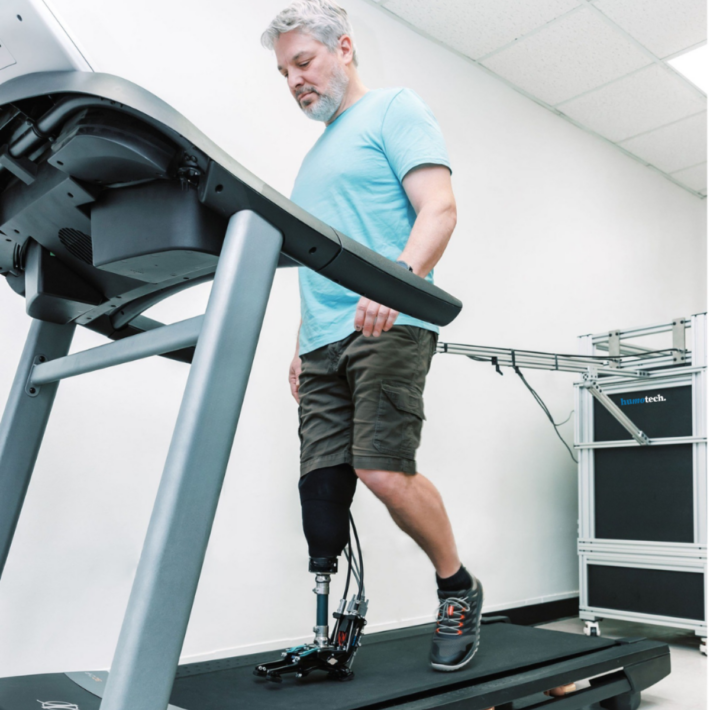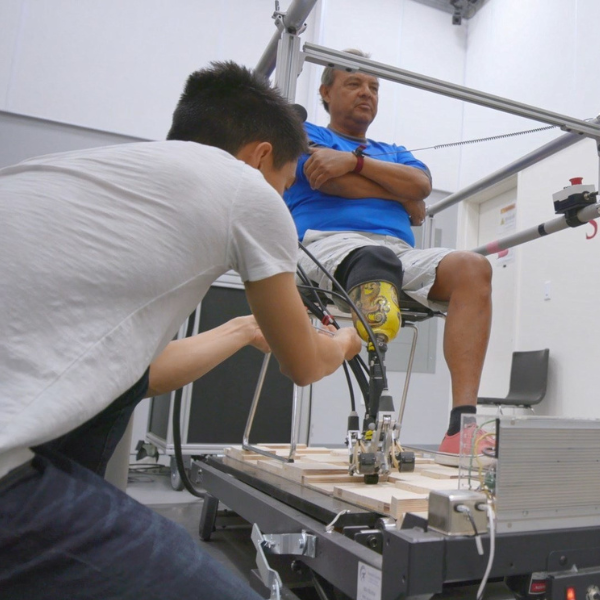
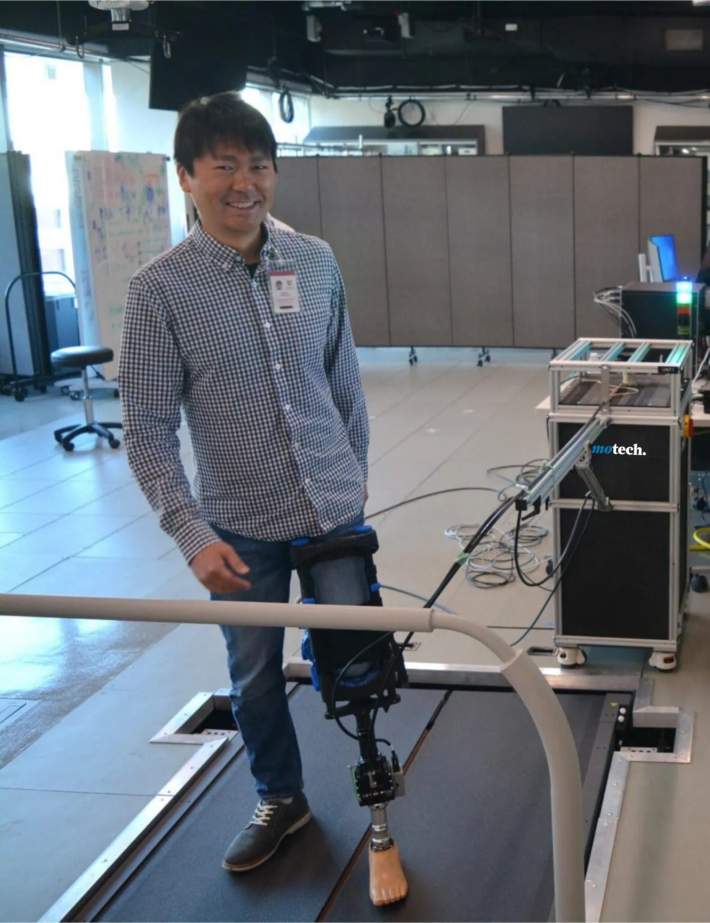
Patient Information Male, 57 Amputation Level Right Below-Knee Introduction Tony Stader has been a below-knee amputee for more than 23 years and has used a variety of prosthetic devices throughout his journey. As a very active husband, father, and man of many hobbies, he knows what a difference the right foot selection can make. Tony […]
Investigating Gait Energetics with Waist Tether Systems
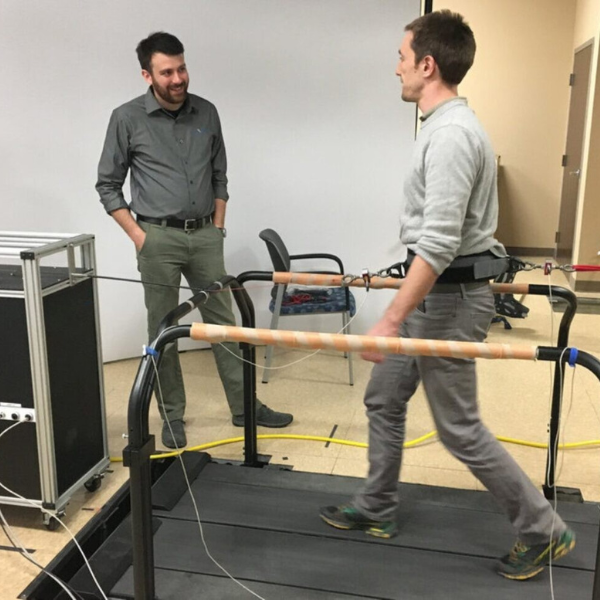
Dr. Philippe Malcolm and his team at the University of Nebraska at Omaha are pioneering research into gait energetics using waist-tethered systems. This innovative setup allows researchers to investigate how external support affects the metabolic costs of walking and running. By tethering subjects at the waist, Dr. Malcolm’s studies provide insights into the biomechanics and energy demands of gait, paving the way for advances in assistive device design and wearable robotics.
Engineering the Future of Mobility
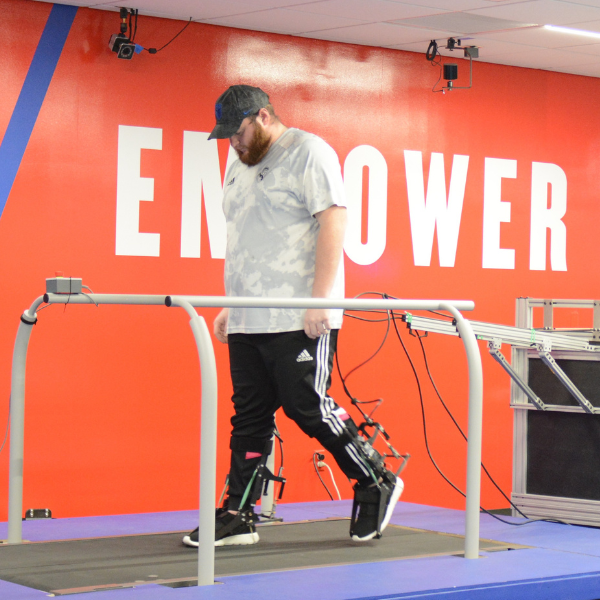
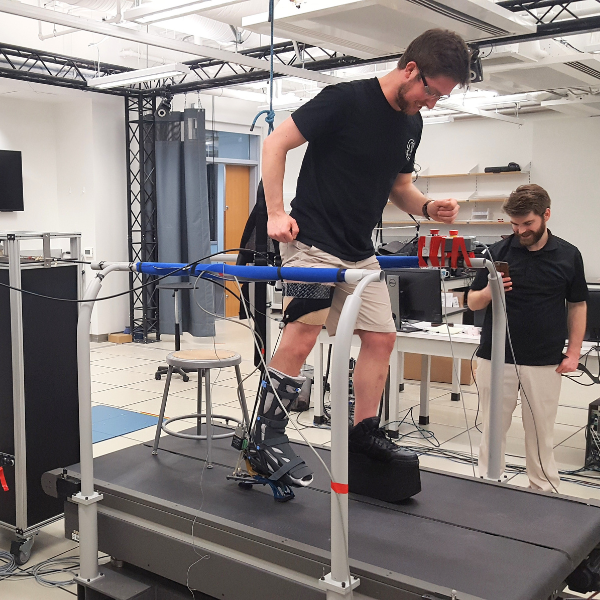
A broad interdisciplinary team of engineers and clinicians at the University of Dayton are leveraging an 8 degree-of-freedom Caplex system configured with bilateral ankle and hip exoskeletons to accelerate research into how aging affects biomechanics. In addition, the team is trailblazing with novel approaches to incorporating the programmable wearable robotic system into both undergraduate and graduate coursework, increasing opportunities for hands-on learning and familiarizing students with these essential tools to set them up for success in their careers.
Exoskeletons that Minimize Metabolic Cost
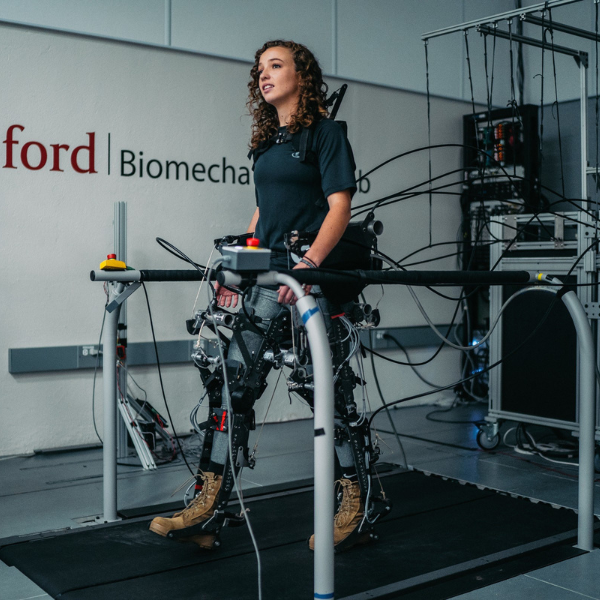
The race is on to realize practical, comfortable, and effective exoskeleton designs that significantly reduce the effort required to walk, run, and more. Grounded in first principles, and combining emulation-based methods with human-in-the-loop optimization, the Stanford Biomechatronics Lab is leading the charge, having realized massive 50% reductions in some conditions. Stay tuned to this page as Steve Collins and his team continue to raise the bar on what is possible, including translating these methods into real-world portable systems by leveraging the massive data set they’ve built via emulation experiments.
Optimizing Ankle-Foot Prosthesis Mechanics
Before there was Caplex, developers of prosthetic foot technologies had no choice but to build prototype after prototype in the pursuit of perfection. In 2010, Josh Caputo, Steve Collins, and Peter Adamczyk came together and began to build an emulation paradigm that today is enabling researchers, developers, and clinician scientists around the world to iterate on prosthetic foot design parameters more quickly, efficiently, and effectively.
Demystifying Biarticular Actuation
The importance of biarticular actuation is one of the many biomechanical mysteries of human locomotion. This is of paramount importance to individuals with trans-tibial amputation who lose the function of the gastrocnemius, which actuates the ankle and knee joint simultaneously. Karl Zelik and his team at Vanderbilt University are leveraging emulation to systematically explore these relationships, expanding our knowledge of this essential physiology and informing the design of future wearable systems that could utilize biarticular actuation to deliver greater energetic and other benefits to individuals.
Protecting Workers’ Backs
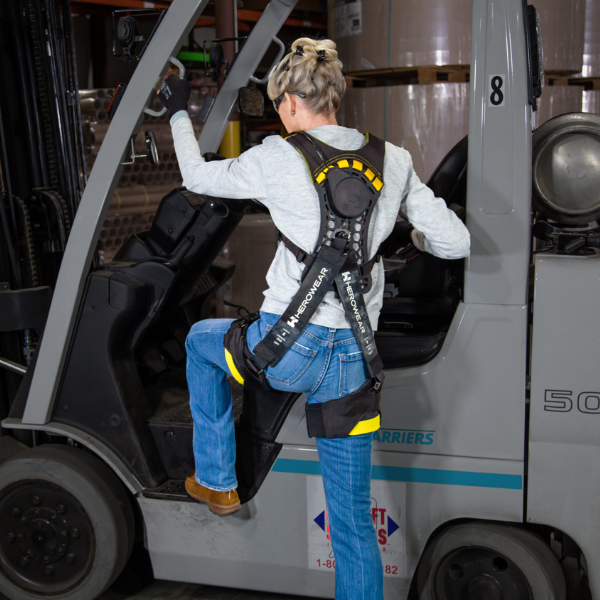
Low back injuries are pervasive, costly, and debilitating for millions of individuals worldwide. Inspired by personal experience, Karl Zelik and his team at Vanderbilt University saw this as an opportunity to apply exoskeleton technology in a new way, with a soft, flexible, unobtrusive design that operates using a deceptively simple mechanism: reducing stress on the muscles supporting the lumbar spine.
Accessible Prosthetic Leg R&D
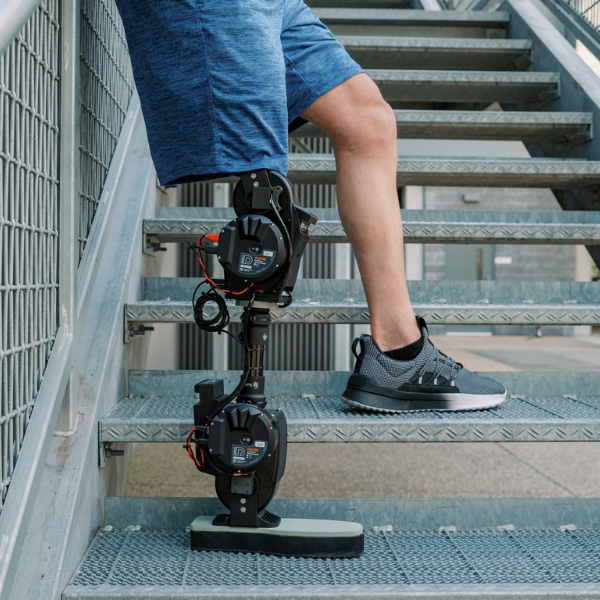
One of the grand challenges in the proliferation of powered robotic limbs is thought to be the ease of controlling these complex systems by their human users and the versatility of their control algorithms across a variety of users and activity types. The Open Source Leg was born in response to the need for a portable, powered, product-like leg to serve as a common development platform. The growing community of researchers and developers, now with support from Humotech, which provides fully-assembled legs as well as assembly packages, are pursuing a wide variety of novel approaches to prosthetic leg control.
Clinical Decision-Making with Caplex®
Utilizing emulation to provide a means to rapidly test-drive enable evidence-based personalized prescriptions to optimize patient outcomes and justify reimbursement has been one of Humotech’s primary objectives since the company’s inception. Foundational research & development began at Carnegie Mellon University, and then was licensed to Humotech and further developed & evaluated by a variety of Department of Veterans Affairs (VA) and Department of Defense (DoD) research centers. This work started with emulating prosthetic feet test-drive strategies, with an emphasis on optimizing subjective patient satisfaction outcomes, and is now expanding in a variety of directions including the use of balance-related outcomes and emulation of ankle-foot orthoses, to name a few.