
Not Safe for Work: Reducing Pain and Injury With Exoskeletons
Vanderbilt University, HeroWear, and the challenge to create industrial exoskeletons that work in the real world
In today’s workforce status quo, certain jobs inevitably come with a higher risk for bodily injury. Warehouse operators, construction workers, health care workers, agricultural workers, and many essential jobs require lifting, bending, and repetitive movement that can strain the back and body.
Back pain and back injury are all too common to workers across industries. Back pain in the US alone has a price tag of over $100 billion a year for medical care, worker compensation payments, and time lost from work. It’s a drain on time, money, and of course, quality of life. Clearly, solutions are needed.
Enter the Exosuit
Researchers from Vanderbilt University are on the frontlines of this multifaceted problem. Matt Yandell holds a PhD from Vanderbilt in mechanical engineering. Karl Zelik is a professor at Vanderbilt where he heads the Zelik Lab for Biomechanics and Assistive Technology. Both are leading researchers in biomechanics and exoskeleton technology. They are also co-founders of HeroWear, a Vanderbilt spinoff based in Nashville that specializes in developing real-world exosuits (soft exoskeletons) for the workplace.
Upon forming HeroWear in 2019 Zelik and Yandell set out to answer the question – is it possible to design a commercial exosuit for the workplace that is both effective and ergonomic? In other words, one that can provide assistance, but also comfort and freedom of movement?
Making the transition from the dreamed-up tech of superhero mythology (Iron Man being the most famous example) to real-world solutions for use on a daily basis, exoskeletons present one of the most exciting engineering challenges of our time. The development of “industrial exoskeletons” used to assist and augment workers on the job isn’t a brand new concept and has been gradually gaining ground, but many barriers stand in the way of creating commercially viable products capable of winning wide industry adoption. There are several key reasons why we don’t see them being more regularly adopted and utilized.
Among those is the lack of fundamental research and guidelines that could help developers design devices that are effective, safe, comfortable, and sustainable (able to perform over the long-term). Although noting many pros, the CDC also lists concerns about industrial exoskeleton applications gathered through independent studies, such as unintended muscle strain, ultimately stressing the need for more scientific research to inform development.
A key area of exo research that needs to be established is user comfort, and in particular, comfort limits – the amount of force that can be applied to a device interface (such as worn on a shoulder or thigh) before causing discomfort or pain to the wearer. An exosuit, for example, involves many interactions between the worn interface and a user’s biological tissues.
“Any time we start applying something external to the body,” Yandell explains, “we’re not going to interact perfectly with the human frame and the human musculoskeletal system.” When it comes to exosuits, a suit that applies higher forces can offer greater assistance, but can also cause increased discomfort and ultimately failure to continue using the device.
When Yandell and Zelik started researching the comfort limits of wearable devices at Vanderbilt, they found there was little quantitative data or published guidelines available. How much force can be applied to a given body segment? How do comfort limits vary across individuals (gender, weight, body types, etc.)? How do they change over time (minutes, hours, days)? Having these kinds of quantitative data would help to fill in that knowledge gap and guide developers in the design and optimization of wearable exosuits.
They set out to investigate, focusing on three key areas of the body relevant to exosuits: the shoulders, thigh, and shank. Study participants wore soft exosuit interfaces on these areas and pulling forces were systematically applied using a Humotech robotic actuator and control system. When users felt uncomfortable, they pushed an off-switch to stop the actuation system from delivering force.
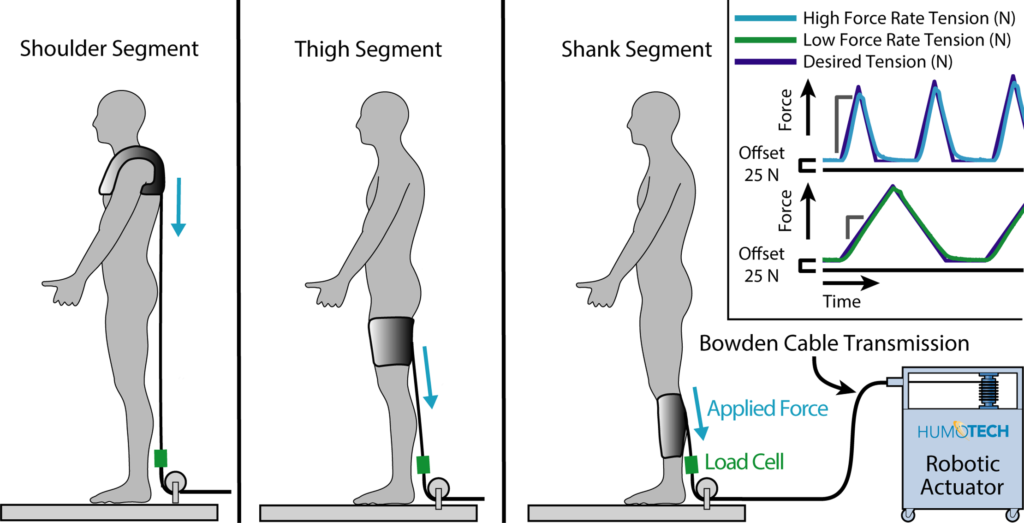
Testing a variety of variables and scenarios over the course of four days, the researchers were able to gain knowledge and insight into comfort limits and published their findings in PLOS One in 2020 (read it here), further driving home the importance that comfort plays in exo design. One interesting finding suggests that comfort limits may actually increase over time as the wearer gets used to the device, which should be considered when testing devices for user comfort.
While the study looked at short-term comfort limits, the authors note that it could help to inform the design of future longer-term studies, which according to Yandell, are critical to exoskeleton research and development:
“We don’t know the long-term implications [of applying external forces to the body with exoskeletons]. That’s one of the big questions now in the field and industry. How do you test these over time? What are the effects on human beings over long periods of time?”
Humotech specializes in providing tools to enable the kinds of experimentation that can help answer these tough questions. In the comfort limits study, the robotic actuator allowed the researchers to quickly test force profiles.
“We were able to carry out rapid, repeatable programmable scenarios, where it would otherwise be unfeasible for a human to apply that much force or impossible to [manifest] that number of cycles,” notes Yandell.
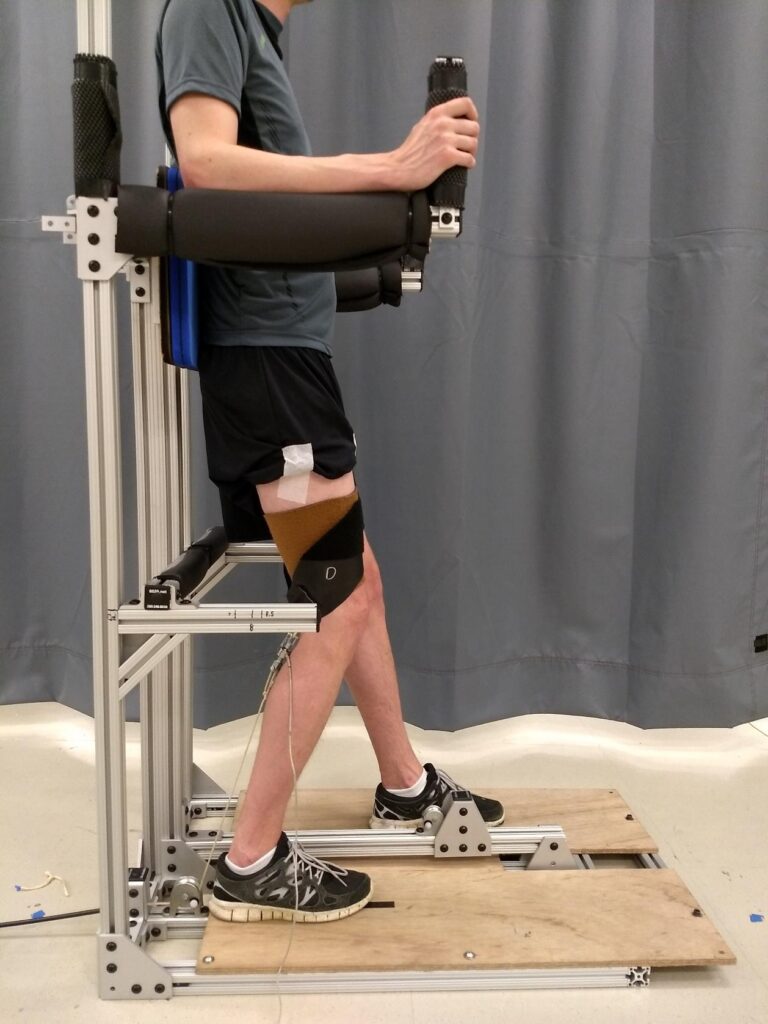
The Vanderbilt team is also engaging the Humotech actuator in other experiments to study musculoskeletal and exo device interaction, testing for optimal levels of stiffness in back-assist exosuits. Yandell has also used it to test HeroWear’s exosuit hardware.
Humotech is helping Zelik and fellow Vanderbilt researcher David Ziemnicki explore prosthetic solutions as well. Collaborating with Josh Caputo, President and CEO of Humotech, they recently developed a novel robotic emulator system to fill biomechanics knowledge gaps and help create more effective commercial prosthetic feet for people with transtibial amputation (publishing in the Journal of Medical Devices). The system emulates the function of a critical component of calf muscles: the gastrocnemius. Commercial below-knee prostheses lack this bi-articular feature, which might leave prosthesis users at a mobility disadvantage. Future research with this new system aims to demystify the potential benefits of an artificial gastrocnemius.
Finding the Right Fit for Industries
Research like Yandell’s and Zelik’s helps to set benchmarks for exosuit design needed to move the whole industry forward. The results from the Vanderbilt comfort limits study was conducted in parallel with the development of HeroWear, so the learnings were available to inform development of HeroWear’s premier back-assist exosuit, the Apex.
The Apex is a wearable fabric exoskeleton that attaches to the shoulders, back, and upper thighs, designed to reduce strain on the lower back. For an average adult, it’s capable of offloading over 75 lbs of strain to the lower back and relieving fatigue of the back muscles, without the use of motors or batteries. Instead, it uses passive-elastic bands that act in synergy with the major muscle groups responsible for bending and lifting, reducing about 15%-40% of peak muscle forces applied; this can result in significant reduction in microdamage to tissue that commonly leads to overuse injuries.
Quickly pressing on a shoulder button (‘clutch’) engages the suit when needed and disengages it when not needed, such as during walking, sitting, or eating lunch. It’s designed to be comfortably worn throughout the day and unobstructive at all times, meaning when both activated and when disabled.
Considering branching into developing commercial industrial exoskeletons, Yandell and Zelik knew going in that ergonomics is a main barrier to gaining adoption – they needed to develop something that people actually want to use. An exosuit might successfully assist warehouse case pickers in lifting heavy boxes or a construction worker who is bent over tying rebar for long periods of time, for example. But if it’s uncomfortable, heavy to wear, and gets in the way of daily work flow, the device can end up being completely counterproductive. Plus, each industry has its own set of specific requirements. Health care workers who regularly lift and move patients need devices that take hospital or health care settings into consideration and are capable of being worn under PPE. Farm and agricultural workers need devices that are compatible with their environment and particular needs.
Zelik and Yandell began formulating the idea of HeroWear after earning positive feedback and awards from Vanderbilt exosuit research shown at the 2017 International Society of Biomechanics conference in Australia. They teamed up with Mark Harris (also a graduate of Vanderbilt) and ergonomics specialist Matt Marino to bring their vision to market (debuting the Apex at WearRAcon 2020).
So far, HeroWear has met with positive results. They’ve delivered Apexes to clients in more than 100 locations around the world. Pilot and field studies show favorable results among workers across industries. And, the suit’s design was internationally recognized with a 2020 Spark Design Award.
Designs Backed by Science and Real-World Testing
The Apex builds on years of research and learning – peer-reviewed research, use cases, field studies, lab testing, trial and error (learn more about the science behind the suit). However, the process of improvement is continuous, as more learning happens across both commercial and research fronts.
It’s the iterative kind of interplay between research and development that will help lead to exo innovation and real-world product adoption. However, the lack of available research shouldn’t keep developers from their work, notes Yandell.
“It’s not enough to simply do the research,” he states, explaining that there’s a real and important value in user testing. Research studies are limited by the number of participants that can reasonably be involved, whereas testing a device in the real world can involve hundreds of thousands of people providing feedback on comfort levels, stiffness, etc.
Discovering and refining exoskeleton solutions for the workforce depends on both of these knowledge streams.
“You need both to get a full picture of what’s going on,” Yandell said. “Both are indispensable.”
By: Danielle Commisso
На [url=https://opppalldh.space/]opppalldh.space[/url] представлений корисний каталог якісних джерел.
Тут ви знайдете свіжу інформацію з політикою, економікою, регіональним розвитком, і ключовими подіями країни.
Виключно якісні ресурси і нічого зайвого. Ідеальне місце для тих, хто хоче слідкувати за новинами без шуму.
Большинство людей час від часу заходят в интернет в поисках чтения, которое не просто убьет время, а подарит новые идеи и неожиданные осознания. На [url=https://streetmusic.com.ua/]streetmusic.com.ua[/url] именно такой контент такой контент, где переплетаются анализы кинолент, рассказы о музыкальных деятелях и психологические зарисовки. Тексты составлены таким образом, что читаешь и ловишь себя на том, что уже представляешь, как воплощается в аудио или на дисплее.
Портал не гонится новизной каждого абзаца, зато формирует атмосферу, будто общаешься с единомышленником, который сам недавно погрузился в предмет и теперь делится находками. Переходишь от одного текста к другому и видишь, как кино перетекает в психологию, а саундтреки объясняют характеры героев. Это удобно для тех, кто предпочитает медленное осмысленное чтение.
Вечером после работы или в уик-энд, когда есть запрос на щось глибоке, многие заходят сюда и обнаруживают искомое. Тексти зберігають баланс между сухими данными и увлекательным повествованием, поэтому не втомлюють.
Info o [url=https://8610075.xyz/indianakortig]Salon Gier Aplikacja[/url]
Używam Salon Gier na Automatach miesiąc – pełna info.
Specyfikacja:
– Oficjalna licencja – [url=https://dtradingthailand.com/author/arlettebindon1/]Salongier[/url] legalne
– Minimum depozyt: zależy od metody
– Możliwość: iOS, Android
– Szyfrowanie: TLS/SSL
– Weryfikacja: dokument tożsamości
O aplikacji:
[url=https://hdtime.space/hptlily8905833]Salon gier na automatach aplikacja[/url] to legalna app z licencją Totalizatora Sportowego. Dostępna [url=https://houseinnaira.com/author/bridgetkelsey2/]Salon Gier na Automatach online[/url] bezpośrednio z telefonu.
Pakiet powitalny:
– Do 10 000 zł bonus
– Salon gier na automatach bonus: rozłożony na 4 depozyty
– Do 550 darmowych spinów
– Wymóg obrotu: x30-x35
– Salon gier na automatach bonus za rejestrację – sprawdź w app
Warunki:
– Aktywacja w zakładce Promocje przed depozytem
– Min. depozyt różny w zależności od promocji
– Ograniczenie stawek w trakcie wageringu
– Czas: wykorzystanie bonusu
– Gry o 100% wkład, live – niższy wkład
Graj na:
– [url=https://code.wemediacn.com/melvingage7794]Aplikacja Salon Gier na Automatach[/url] – mobilna
– Lotto Salon Gier – integracja loterii
– [url=https://git.aiximiao.com/glinda57r9993]Salon Gier na Automatach Lotto Aplikacja[/url] – połączenie
Idealne dla:
– Szukających legalnej rozrywki
– Miłośników wielu slotów
– Początkujących – tryb demo dostępny
– Ceniący program lojalnościowy: punkty
– Użytkowników w Polsce – pełna polska obsługa
Nie polecam jeśli:
– Chcesz gier bez weryfikacji
– Osób poniżej 18 lat
– Oczekujesz bez limitów
– Wolisz braku procedur KYC
Zagrożения:
– Gra losowa – RNG certyfikowany, jednak wyniki nieprzewidywalne
– Wymóg obrotu – musisz spełnić x30-x35 przed wypłatą
– Limit stawek podczas obrotu
– Salon Gier na Automatach Bonus ma termin – jeśli przekroczysz termin, tracisz bonus
Limity:
– Limit wiekowy: 18+ (obowiązkowe)
– Depozyt, stawki, czas – ustawiasz sam
– Termin aktywacji bonusu – zwykle kilka dni
– Niektóre gry mają niższy wkład
Dlaczego Salon Gier na Automatach:
– Licencja Totalizatora – zamiast nieznanych operatorów
– Bonus do 10 000 zł – jeden z najwyższych + Salon Gier na Automatach Bonus za Rejestrację
– Program VIP z rzeczywistą wartością – cashback
– Wsparcie 24/7 – polska obsługa: czat
– RNG/RTP audyty – transparentne wskaźniki
– Tryb demo – test bez ryzyka
– Szyfrowanie TLS/SSL – dane bezpieczne
Pobierz Salon Gier Aplikacja:
Pobierz Salon Gier na Automatach teraz i odbierz bonus + spiny.
Rating:
Legalna i solidna platforma z ponad 10k zł bonusu
Rekomendacja dla osób szukających bezpieczeństwa i bonusów.
Graj odpowiedzialnie!
Коли заходиш на institute.lviv.ua, зразу розумієш, як багатство контенту захоплює від перших рядків. Сайт не обмежується однією темою, а сплітає воєдино історії з культури, практичні поради для дому, відомості про оборону та щоденні турботи. Саме ця суміш робить його яскравим серед інших ресурсів, адже кожен знайде тут щось близьке саме собі.
Матеріали на [url=https://www.institute.lviv.ua/]institute.lviv.ua[/url] часто беруть початок з реальних ситуацій, які цікавлять українців сьогодні, і розвивають повнішу картину. Такий підхід дозволяє не лише повідомляти, а заглиблювати в нюанси, які залишаються в пам’яті.
Читачі заходять ще раз сюди, бо статті не намагаються запхати все в формальні дані, а передають про повсякденну реальність з його деталями та цікавими переплетеннями.
Як сайт поєднує історію з сучасними викликами
Однією з сильних сторін institute.lviv.ua стає талант з’єднувати минуле з сьогоденням. Статті про народні звичаї, наприклад пасхальні звичаї, не закінчуються на поверхових фактах. Вони заглиблюються в те, як старі легенди не зникають в сучасних родинах, як перетворюються знаки з роками. Читач бачить, що навіть звичайні предмети на кшталт шоколадних фігурок мають давнішу історію.
Поруч з культурними матеріалами публікуються статті, які стосуються оборони. Аналіз ППО, таких як IRIS-T, розкривається через призму реальних подій. Автори доносять технічні моменти простою мовою, розповідають про шлях розробки ракети та її значення для захисту неба. Це не суха техніка, а оповідь про те, як інженерні досягнення впливають на життя звичайних людей.
Таке сполучення допомагає побачити, що культура й оборона не існують окремо. Вони перехрещуються в одному суспільстві, яке намагається утримати свою ідентичність у складні часи. Читач, який шукає контекст, отримує його просто й по суті.
Подібний стиль простежується й в інших текстах. Вони не нав’язують думку, а показують різні грані явища, залишаючи простір для власних висновків. Саме тому матеріали читаються природно, ніби бесідa з досвідченою людиною.
Сьогоднішній інформаційний простір заповнений численними ресурсами, де кожне прагне привернути увагу своєю унікальністю. Поміж них plandiy.com.ua вирізняється спроможністю висвітлювати ситуації так, наче вони трапляються у цю мить, без зайвого зволікання або спотворень. Відвідувачі нерідко приходять знову на цей ресурс, адже знаходять тут гармонійне поєднання між оперативністю та глибиною висвітлення.
Найбільше притягує те, як [url=https://plandiy.com.ua/]plandiy.com.ua[/url] природно комбінує місцеві українські події з міжнародним контекстом, даючи змогу читачам оперативно знаходити відповіді в тому, що коїться поруч. Така метода трансформує ресурс не лише набором новин, а своєрідним навігатором по сьогоднішнім справам.
Народе, ненавмисно знайшов на один веб-ресурс. З першого погляду здався типовий рядовий блог, але я придивився уважніше. Тематики дуже різноманітні: розділи про історію, космос, новини, поради й природу. Виходить, можна і серйозні матеріали гортати, і корисні поради читати.
Для прикладу, зараз там є стаття про звичаї та народні прикмети на сьоме травня, а неподалік — нотатка про технічний збій Монобанку в 2026 році. І все це на одному ресурсі: [url=https://triada.in.ua/]triada.in.ua[/url]
Окрема рубрика «Церковні та святкові дні» — теж нечасто таке бачиш. Ресурс не засмічений рекламою, матеріали досить великі та пізнавальні. Я взяв собі на замітку категорії про космос і лайфаки. Можете глянути – може, й вам зайде. Якщо хтось уже бачив цей ресурс? Як вам?
Коли наближається свято чи звичайно хочеться сказати рідній людині щось душевне, слова подекуди не йдуть. Саме у такі моменти добре зазирнути на сайт, де вміщено безліч слів, які звучать по-людськи, без зайвої награної урочистості. На [url=https://mgk.if.ua/]mgk.if.ua[/url] можливо підібрати привітання, які доречні і для Нового року, і для Різдва, і для днів, коли людина потребує підтримки. На цьому ресурсі матеріали складені так, наче їхні тексти склав той, кому відомо, наскільки важливо не просто сказати, а справді подарувати тепло.
Багато хто звертав увагу, що шаблонні тексти з магазинних листівок нерідко виглядають бездушними. Натомість на цьому ресурсі акцент роблять на тому, щоб побажання передавало реальні емоції — спокій і тишу, турботу про здоров’я, радість. Коли читаєш їх, стає зрозуміло, чому саме подібні слова закарбовуються у пам’яті довше, ніж котрась там шаблонна фраза.
Яким чином портал дозволяє підібрати необхідні слова для різних випадків
Побажання на mgk.if.ua охоплюють багато випадків, від урочистих і до повсякденних. Для зимових свят тут можна знайти матеріали, де згадують сніжок, кутя, затишні вечори за столом. Ці тексти не перенасичені деталями, однак передають атмосферу: як зерно в куті символізує міцність, а свічка на столі — сподівання. Подібні слова легко підлаштувати під потреби власну родину, додаючи власні спогади.
Для днів народження пропонують варіанти, які враховують професію чи особливості людини. Можна знайти побажання для вчителів, інженерів, творчих людей — кожне звучить природно, наче розмова за чашкою чаю. Не пафосність, а просте відзначення того, що людина робить кожного дня. Цей підхід допомагає позбутися враження, що привітання скопіювали з першого-ліпшого доступного ресурсу.
Окремо треба відзначити слова одужання. У них немає жодної зайвої драми, однак є щира турбота: згадки про родинне тепло, спокійні ранки вдома, коли сили відновлюються помалу. Подібні слова мають вплив, бо вони самі не примушують, а просто нагадують, що хворий не сама.
Salon Gier na Automatach Online szczegóły
Sprawdzałem Salon Gier na Automatach kilka tygodni – pełna info.
Specyfikacja:
– Licencja Totalizatora Sportowego – [url=https://ecr.pixeleducate.com/author/ruthie69812103/]Salongier[/url] legalne
– Depozyt minimalny: różne kwoty
– Dostępne na: iOS, Android
– Szyfrowanie: TLS/SSL
– Potwierdzenie tożsamości: dokument + selfie
Co to jest:
[url=https://careersearchinfo.com/employer/netzballverein/]Salon gier na automatach aplikacja[/url] to oficjalna app licencjonowana przez Totalizatora Sportowego. Dostępna [url=https://git.homeinfra.org/margretblundst]Salon Gier na Automatach online[/url] z mobilnego.
Bonus:
– Do 10 000 zł bonus
– Salon gier na automatach bonus: rozłożony na 4 depozyty
– Nawet 550 darmowych spinów
– Wagering: x30-x35
– Salon gier na automatach bonus za rejestrację – sprawdź w app
Regulamin:
– Aktywacja w zakładce Promocje przed depozytem
– Minimalny depozyt różny w zależności od promocji
– Limit stawek w trakcie wageringu
– Termin: aktywacja i wykorzystanie
– Gry o 100% wkład, stołowe – mniej
Graj w:
– [url=https://git.linuxposting.xyz/damienngd01934]Aplikacja Salon Gier na Automatach[/url] – na telefon
– Lotto Salon Gier – integracja loterii
– [url=https://jobsathealthcare.com/employer/antonianum/]Salon Gier na Automatach Lotto Aplikacja[/url] – połączenie
Idealne dla:
– Szukających legalnej rozrywki
– Miłośników szerokiego wyboru slotów
– Nowych graczy – tryb demo dostępny
– Ceniący program lojalnościowy: punkty
– Użytkowników w Polsce – pełna polska obsługa
Nie dla:
– Chcesz gier bez weryfikacji
– Osób poniżej 18 lat
– Oczekujesz bez limitów
– Wolisz braku procedur KYC
Zagrożения:
– Gra losowa – RNG certyfikowany, jednak wyniki nieprzewidywalne
– Wymóg obrotu – musisz spełnić x30-x35 przed wypłatą
– Limit stawek podczas obrotu
– Salon Gier na Automatach Bonus ma termin – jeśli przekroczysz termin, utrácisz bonus
Ograniczenia:
– Limit wiekowy: 18+ (obowiązkowe)
– Depozyt, stawki, czas – ustawiasz sam
– Termin aktywacji bonusu – zazwyczaj kilka dni
– Niektóre gry mają niższy wkład
Dlaczego Salon Gier na Automatach:
– Licencja Totalizatora – zamiast operatorów
– Bonus do 10 000 zł – jeden z najwyższych + Salon Gier na Automatach Bonus za Rejestrację
– Program VIP z rzeczywistą wartością – turnieje
– Wsparcie 24/7 – polska obsługa: czat
– RNG/RTP audyty – transparentne wskaźniki
– Tryb demo – test bez ryzyka
– Szyfrowanie TLS/SSL – dane bezpieczne
Zainstaluj Salon Gier Aplikacja:
Download Salon Gier na Automatach już i odbierz do 10 000 zł + spiny.
Ocena:
Legalna i solidna platforma z ponad hojnymi bonusami
Polecam dla osób szukających bezpieczeństwa i bonusów.
Graj odpowiedzialnie!
Багато хто шукає місця, де можна знайти матеріали, що поєднують розвагу з корисними деталями про життя відомих людей чи повсякденні задачі. Саме таким ресурсом стає [url=https://oh.ua/]oh.ua[/url], де публікують статті, які зачіпають різні сторони людського досвіду. Читачі знаходять тут і глибокі розповіді про акторів, і прості пояснення, як розібратися з головоломками чи зрозуміти себе. Кожен матеріал тримає увагу, бо автор підходить до теми з цікавістю, ніби ділиться знахідкою за кавою.
Сайт постійно оновлюється, і це робить його привабливим для тих, хто хоче проводити час з користю. У перших публікаціях дня часто з’являються свіжі портрети особистостей, чиї долі надихають або змушують замислитися. oh.ua дає змогу зануритися в такі історії, не відчуваючи тиску сухих фактів, а наче слухаючи розповідь друга, який добре підготувався. Це допомагає краще зрозуміти, як складалися кар’єри чи формувалися характеры.
Окрім біографій, тут приділяють увагу темам, які стосуються щоденного життя. Читач може перейти від розповіді про високу актрису до порад, як полегшити рутину. oh.ua таким чином створює відчуття живого простору, де кожна стаття доповнює іншу, формуючи ширше уявлення про світ навколо.
Різноманітність тем що приваблює постійних читачів
На oh.ua матеріали охоплюють широкий спектр інтересів, тому кожен знаходить щось своє. Одні статті розповідають про кінематографічні ікони, інші розбирають практичні навички. Така палітра робить сайт зручним для тих, хто не хоче обмежуватися одним напрямком. Читач може почати з біографії чеської актриси, а закінчити гайдом по збору кубика Рубіка. Кожна публікація тримається на реальних деталях і намагається показати тему зсередини.
Автори звертають увагу на нюанси, які часто залишаються поза увагою в інших джерелах. Наприклад, у матеріалах про знаменитостей акцент робиться не лише на успіху, а й на труднощах, з якими доводилося стикатися. Це створює об’ємне враження. Практичні тексти теж не обмежуються загальними рекомендаціями, а пропонують конкретні кроки, адаптовані для звичайних людей. Такий підхід робить контент близьким і зрозумілим.
Сайт уникає одноманітності, чергуючи легкі історії з більш аналітичними. Читач відчуває, що матеріали готувалися з думкою про реальні потреби аудиторії. Завдяки цьому oh.ua стає місцем, куди повертаються, щоб відпочити від одноманітного контенту в мережі.
Біографії які залишають слід у пам’яті
Одним з найсильніших напрямків на сайті є портрети відомих особистостей. Читачі знаходять тут детальні розповіді про Либуше Шафранкову, яка назавжди асоціюється з чарівною Золушкою. Її шлях від театральних сцен до кіноекранів показаний через призму характеру та виборів, які формували долю. Такі тексти допомагають зрозуміти, як талант поєднується з наполегливістю.
Не менш цікаво виглядає історія принцеси Маргарет. Стаття передає її бунтарський дух і музикальність, показуючи, як молода дівчина з королівської родини шукала свій голос у світі правил. Читач бачить не просто факти, а живу людину з сильними емоціями та бажанням бути собою. Подібний підхід застосовується й до інших фігур, наприклад Гвендолин Кристи, де акцент на тому, як фізичні особливості стали частиною професійної сили.
Такі матеріали працюють на кількох рівнях. Вони дають нову інформацію, але також змушують задуматися про власне життя. Читач проводить паралелі з героями статей, помічаючи спільні риси в боротьбі за місце під сонцем. Це робить біографії на oh.ua не просто розвагою, а інструментом для кращого розуміння себе.
Практичні гайди для щоденного життя
Окрім історій про зірок, сайт пропонує матеріали, які допомагають у повсякденності. Гайд по збору кубика Рубіка, наприклад, веде від перших кроків до впевненого володіння. Автор пояснює техніки доступно, ніби показує трюк за плечима. Читач, який раніше боявся навіть торкатися головоломки, отримує реальний шанс освоїти її.
Інші тексти торкаються питань здоров’я та самопізнання. Матеріал про те, як полегшити навантаження на живіт, пропонує м’які підходи для тих, хто не любить інтенсивних тренувань. Акцент на регулярності та правильному диханні робить поради реалістичними. Подібно розбирається тема інтроверсії, де пояснюється, як жити в гармонії зі своєю природою, не намагаючись перебудувати себе.
Такі статті цінні тим, що спираються на спостереження та перевірені підходи. Вони не обіцяють миттєвих змін, а показують шлях, який можна пройти поступово. Читачі відзначають, що після таких матеріалів з’являється бажання спробувати щось нове в своєму ритмі.
Цікаві факти та розбори що розширюють кругозір
Сайт не обходить стороною теми, пов’язані з культурою та повсякденними речами. Розбір складу гематогену пояснює, чому продукт має саме такий смак і склад, спираючись на реальні компоненти. Це задовольняє цікавість тих, хто хоче розуміти, що споживає. Історії з минулого, як-от про довоєнні місця, додають відчуття глибини часу.
Матеріали про акторів, які грали Человека-паука, дають повний огляд еволюції образу. Читач бачить, як змінювався підхід до ролі з десятиріччями. Кожен виконавець приносив свою енергію, і стаття допомагає відчути ці відмінності. Такі розбори збагачують уявлення про кіноіндустрію.
Загалом ці тексти працюють на формування ширшого світогляду. Вони поєднують факти з контекстом, роблячи знання живим і запам’ятовуваним.
Як oh.ua допомагає в саморозвитку
Читаючи матеріали сайту, люди часто знаходять відповіді на питання, які давно турбували. Статті про психологічні типи пояснюють, чому деякі люди відновлюються в тиші, а інші в компанії. Це допомагає приймати себе і оточуючих. Практичні рекомендації з фізичної активності доповнюють цей процес, показуючи, як маленькі зміни впливають на самопочуття.
Автори намагаються говорити просто, але по суті. Вони уникають надмірної складності, концентруючись на тому, що реально працює. Завдяки цьому сайт стає супутником для тих, хто прагне кращого розуміння себе без радикальних змін.
Такий баланс між розвагою та користю робить oh.ua особливим місцем в українськомовному сегменті.
У підсумку матеріали на сайті формують звичку до якісного контенту. Читач виходить з кожної статті з новими знаннями чи ідеями, які можна застосувати. Це створює цикл, коли хочеться повертатися знову і знову, відкриваючи для себе чергові грані знайомих тем.
різноманітність тем від біографій до практичних гайдів;
глибина розповідей про реальних людей та їхні виклики;
доступність викладу для звичайного читача;
регулярне оновлення свіжими матеріалами;
баланс між розвагою та корисними знаннями;
природність стилю що робить текст близьким;
можливість знайти щось нове для себе.
За словами редактора подібних ресурсів, успіх таких платформ полягає в умінні поєднувати факти з живою подачею. Читачі цінують, коли автор не просто перелічує відомості, а допомагає їх осмислити.
Таким чином, oh.ua продовжує збирати навколо себе аудиторію, яка шукає змістовного читання. Сайт нагадує, що цікаві історії та практичні знання можуть йти поруч, збагачуючи кожен день.
Коли раптом постає нагальне питання про тариф мобільного такого оператора або тлумачення знайомого імені людини, переважна більшість користувачів вмикають пошуковик і розгублюються серед купи сторінок. Власне в такий момент корисний портал із зібраними відповідями стає справжнього помічника. Не один відвідувач уже відзначив, що на [url=https://wohoo.ua/]wohoo.ua[/url] статті підготовлені так, наче сусід пояснює непросте доступними фразами, без зайвих ускладнень. Тут подані тексти, що дають змогу впоратися з щоденними дрібницями, життєписами відомих постатей і навіть із фінансовими нюансами, які часто збивають із толку.
Відвідувачі заходять сюди не заради голосних заголовків, а щоб швидко знайти потрібну інформацію по справі і рухатися далі. Матеріали зачіпають різні сторони життя, від кухонних хитрощів до святкових дат і подій, і кожнісінька з них побудована так, щоб відвідувач міг застосувати знання тут же. Це формує відчуття, що хтось інший уже подолав цей самий шлях і обмінявся досвідом без жодних зайвих прикрас.
Коли треба швидко перевірити мобільний тариф або інші побутові деталі
Не пам’ятати, який саме такий тарифний такий план під’єднаний на номері телефону Київстар, трапляється частіше за все, аніж хотілося б. Людина перебуває в крамниці, пробує зрозуміти, чи вистачить їй трафіку, і раптово згадує, що правила могли вже змінитися. На ресурсі вміщені дієві методи перевірки тарифу, що діють у 2026 році. Наведено кілька способів, від коротких команд до власного кабінету абонента, і кожнісінький етап розтлумачений без складних спеціальних слів. Читач просто повторює дії і здобуває відповідь за лічені хвилин часу.
Подібні статті торкаються не тільки мобільного зв’язку. На цьому ресурсі можливо знайти інструкції, як зробити скріншот на МакБуці, якщо до того користувалися лише простим лептопом. Три всього кнопки, і зображення уже на моніторі, а стаття показує, куди воно зберігається потім і як швидко його там відшукати. Подібні деталі заощаджують ваш час, надзвичайно коли потрібно швидко надіслати зображення документів чи схеми. Матеріали написані так, наче дописувач сам щойно пройшов цей шлях і запам’ятав всі ці підводні камені.
Читачі відзначають, що інформація підправляється під поточний рік. Не знайдеш застарілих порад, які уже не працюють. Коли ж з’являється свіжа версія програми або міняються правила оператора, текст підправляють. Такий підхід створює почуття надійності. Людина повертається, бо знає, що відповідь буде правильною, а не витягнутою звідкись з архіву якогось п’ятирічної давнини. Подібний підхід надзвичайно зручний для тих, хто не любить довго й нудно розбиратися в сухих довідниках.
I don’t think the title of your article matches the content lol. Just kidding, mainly because I had some doubts after reading the article.
Состояние пациента отслеживается на каждом этапе, от первичной консультации до дальнейших рекомендаций.
Изучить вопрос глубже – [url=https://vyvod-iz-zapoya-v-gelendzhike4.ru/]вывод из запоя цена[/url]
В океані контенту, котрі щодня заповнюють інтернет-простір, потрапляють платформи, де контент підібрано з орієнтацією на практичну користь для аудиторії. Платформа збирає статті різноманітного характеру, від інструкцій із життя до роз’яснень щоденних мовних ситуацій і психологічних моментів. Читач може знайти тут актуальні новинні дописи, і матеріали, які допомагають зрозуміти в деталях звичайного життя.
Необхідно додати, що постійне відвідування [url=https://mainacademy.ua/]Main Academy[/url] дозволяє без зайвих зусиль розбиратися в суміші тем, що стосуються як побутових питань, і психоемоційного стану. Тексти написані простою мовою, без зайвого ускладнення, тож їх зручно читати навіть коли втомився за день.
Одним із напрямків, який постійно висвітлюється, пов’язаний із садівництвом й догляду за типовими рослинами. У статтях детально описується, які етапи підготовки землі під кавуни, які сорти найкраще вибирати для різних регіонів України і коли саме варто сіяти насіння. Звертається увага на температурні показники ґрунту, запобігання заморозкам а також типові промахи, через які рослини гинуть. Ці публікації допоможуть тим, у кого маленька ділянка і прагне виростити свій урожай без зайвих втрат. Рекомендації засновані на досвіді минулих років із урахуванням погодних умов на різних територіях.
Важливим розділом є роз’яснення коректного застосування українських форм. Багато хто плутає звороти типу «півтора місяця» і помилково ставлять множину. Тексти детально роз’яснюють, чому після числівника з дробом слід ставити родовий відмінок одини, демонструють таблиці відмінкових форм та зіставлення з різними іменниками. Такі матеріали сприяють уникнути помилок, запозичених з інших мов та закріплюють почуття мовної норми. Вони написані без сухого академізму, подаючи приклади з щоденної практики, отже, дані запам’ятовуються без зусиль і одразу застосовується в листах чи розмовах.
Thank you for your sharing. I am worried that I lack creative ideas. It is your article that makes me full of hope. Thank you. But, I have a question, can you help me?
Принимаем заявки круглосуточно, уточняем состояние и подбираем безопасный формат помощи.
Углубиться в тему – http://kodirovanie-ot-alkogolizma-odintsovo2.ru
Заявку можно оставить в любое время, специалист быстро сориентирует по дальнейшим действиям.
Получить дополнительные сведения – [url=https://vyvod-iz-zapoya-korolev2.ru/]вывод из запоя[/url]
Лечение на дому подходит зависимым без признаков критических осложнений, которым допустимо провести детокс в привычной обстановке. Такой формат выбирают за комфорт, конфиденциальность и возможность получить помощь без самостоятельной поездки в клинику. Выездная бригада работает по Кемерово и в пределах доступной зоны обслуживания области, а конкретный район и время приезда можно обсудить по телефону.
Ознакомиться с деталями – [url=https://n.vyvod-iz-zapoya-kemerovo18.ru/]нарколог на дом вывод из запоя[/url]
Когда клиника далеко, время позднее или важна конфиденциальность, помощь на дому позволяет начать лечение немедленно и в комфортной обстановке. Ниже — типичные ситуации, когда визит нарколога на дом особенно уместен.
Получить дополнительную информацию – https://narkolog-na-dom-serpuhov6.ru/vrach-narkolog-na-dom-v-serpuhove/
Клиника “Обновление” также активно занимается просветительской деятельностью. Мы организуем семинары и лекции, которые помогают обществу лучше понять проблемы зависимостей, их последствия и пути решения. Повышение осведомленности является важным шагом на пути к улучшению ситуации в этой области.
Углубиться в тему – http://kapelnica-ot-zapoya-irkutsk.ru/kapelnica-ot-zapoya-v-kruglosutochno-v-irkutske/
Популярний український [url=https://mulkarecepkanew.space/]дайджест[/url] чітких та цікавих розповідей різної тематики.
Регулярно свіжі матеріали: біографії зірок та легендарних спортсменів, прості рецепти, традиційні вірування, пригодницькі локації, популярна наука, корисні поради, фільми, вплив планет й плюс ще 50+ напрямків.
Переважна більшість статей – це приблизно хвилина читання, без загальних фраз, живою мовою, якою говоримо.
Помощь оказывают врачи с практикой в наркологии, психиатрии и восстановительной терапии.
Получить больше информации – [url=https://k.vyvod-iz-zapoya-kemerovo18.ru/]вывод из запоя клиника[/url]
Соблюдаем конфиденциальность, бережно общаемся с пациентом и его близкими на каждом этапе.
Получить больше информации – [url=https://1.vyvod-iz-zapoya-krasnoyarsk55.ru/]вывод из запоя круглосуточно[/url]
В этой медицинской статье мы погрузимся в актуальные вопросы здравоохранения и лечения заболеваний. Читатели узнают о современных подходах, методах диагностики и новых открытий в научных исследованиях. Наша цель — донести важную информацию и повысить уровень осведомленности о здоровье.
Не упусти шанс – [url=https://mirperedel.ru/zdorove/kak-lechat-alkogolizm-v-2026-godu-rabotayushhie-metody-i-realnyj-opyt-rossijskih-klinik]алкоголь лечение алкоголизма[/url]
Помощь можно получить анонимно, с аккуратным оформлением и внимательным отношением к личным данным.
Изучить вопрос подробнее – http://maps.google.co.ve/url?q=https://1.vyvod-iz-zapoya-reutov4.ru
Принимаем заявки круглосуточно, уточняем состояние и подбираем безопасный формат помощи.
Получить больше информации – [url=https://vyvod-iz-zapoya-domodedovo3.ru/]вывод из запоя недорого[/url]
Your point of view caught my eye and was very interesting. Thanks. I have a question for you. https://accounts.binance.com/en-JP/register-person?ref=UM6SMJM3
В этой статье мы обсудим процесс восстановления после зависимостей, акцентируя внимание на различных методах и подходах к реабилитации. Читатели узнают, как создать план выздоровления и использовать полезные ресурсы для достижения устойчивых изменений.
Полезно знать – [url=https://tehnoring.ru/zdorove/lechenie-narkozavisimosti]наркологический центр в мытищах[/url]
Перед применением конкретных средств врач проводит обследование, определяет уровень интоксикации и выявляет сопутствующие заболевания. Это позволяет максимально точно подобрать лечение. Ниже представлены ключевые методы, которые применяются для стабилизации состояния пациента:
Разобраться лучше – [url=https://vyvod-iz-zapoya-rostov-na-donu14.ru/]вывод из запоя на дому в ростове-на-дону[/url]
Функция
Разобраться лучше – http://snyatie-lomki-nnovgorod8.ru
Одним из ключевых факторов успешного лечения наркомании является психотерапия. В клинике «Сибирский Доктор» применяются различные методы психотерапии, включая когнитивно-поведенческую терапию, групповые и индивидуальные занятия, которые помогают пациентам осознать причины зависимости, научиться справляться с эмоциональными и психологическими трудностями.
Подробнее – [url=https://lechenie-narkomanii-novosibirsk0.ru/]лечение больных наркоманией новосибирск[/url]
«Как отмечает врач-нарколог Алексей Николаевич Прудников, «выезд нарколога на дом — это возможность стабилизировать состояние пациента в привычной обстановке, снизив стресс и риски осложнений».»
Ознакомиться с деталями – http://narkolog-na-dom-v-krasnodare14.ru/krasnodar-narkologicheskaya-klinika/
Эта статья подробно расскажет о процессе выздоровления, который включает в себя эмоциональную, физическую и психологическую реабилитацию. Мы обсуждаем значимость поддержки и наличие профессиональных программ. Читатели узнают, как строить новую жизнь и не возвращаться к старым привычкам.
Погрузиться в научную дискуссию – [url=https://kukla.site/zdorove/neyronnaya-lovushka-alkogol-i-narkotiki]вывод из запоя анонимно[/url]
В этой статье мы подробно рассматриваем проверенные методы борьбы с зависимостями, включая психотерапию, медикаментозное лечение и поддержку со стороны общества. Мы акцентируем внимание на важности комплексного подхода и возможности успешного восстановления для людей, столкнувшихся с этой проблемой.
Читать полностью – [url=https://life-extreme.ru/vyvod-iz-zapoya-na-domu-kak-obespechit-bezopasnoe-lechenie-v-privychnoy-obstanovke/]кодирование от алкоголизма в Волгодонске[/url]
Мы рассмотрим современные вызовы здравоохранения и пути их решения с помощью технологий и научных исследований. В статье собраны данные о новых лекарствах, методах диагностики и системном подходе к улучшению здоровья населения.
Более подробно об этом – [url=https://tonus-studiya.ru/kto-obrashhaetsya-v-narkologicheskuyu-kliniku-ut-k-vosstanovleniyu-i-novoj-zhizni/]капельница от запояв Волгодонске[/url]
Медицинская публикация представляет собой свод актуальных исследований, экспертных мнений и новейших достижений в сфере здравоохранения. Здесь вы найдете информацию о новых методах лечения, прорывных технологиях и их практическом применении. Мы стремимся сделать актуальные медицинские исследования доступными и понятными для широкой аудитории.
Подробнее можно узнать тут – [url=https://womenjournal2019.ru/chastnyj-narkologicheskij-centr/]наркологическая клиника воронеж[/url]
В этом исследовании рассмотрены методы лечения зависимостей и их эффективность. Мы проанализируем различные подходы, используемые в реабилитационных центрах, и представим данные о результативности программ. Читатели получат надежные и научно обоснованные сведения о данной проблеме.
Практические советы ждут тебя – [url=https://narcologiya.info/alkogolizm/zavisimost-eto-bolezn-a-ne-slabost-voli-pochemu-vazhno-eto-ponimat.html]наркологический центр[/url]
Корректная среда — половина успешной инфузии. Этот порядок действий помогает врачу быстрее принять решения, а пациенту — легче перенести первые часы.
Получить больше информации – [url=https://narkolog-na-dom-v-samare16.ru/]частный нарколог на дом в самаре[/url]
В данной статье мы акцентируем внимание на важности поддержки в процессе выздоровления. Мы обсудим, как друзья, семья и профессионалы могут помочь тем, кто сталкивается с зависимостями. Читатели получат практические советы, как поддерживать близких на пути к новой жизни.
Желаете узнать подробности? – [url=https://housefindr.ru/pages/lechenie-narkomanii-i-alkogolizma/]лечение наркомании в стационаре[/url]
В данном материале представлены ключевые тенденции в сфере медицинской науки и практики. Вы узнаете о последних открытиях, инновационных подходах к терапии и важности профилактики заболеваний. Особое внимание уделено практическому применению новых методов в клинической практике.
Ознакомиться с отчётом – [url=https://driveautorent.ru/pages/anonimnyj-narkologicheskij-centr-nizhnij-novgorod/]частная наркологическая помощь[/url]
Этот документ охватывает важные аспекты медицинской науки, сосредотачиваясь на ключевых вопросах, касающихся здоровья населения. Мы рассматриваем свежие исследования, клинические рекомендации и лучшие практики, которые помогут улучшить качество лечения и профилактики заболеваний. Читатели получат возможность углубиться в различные медицинские дисциплины.
Информация доступна здесь – [url=https://drainix.ru/pages/narkologicheskaya-klinika-samara-ceny/]наркологическая клиника телефон[/url]
Обзор посвящён процессу восстановления после зависимостей. Мы расскажем о различных этапах реабилитации, поддерживающих ресурсах и важности мотивации в достижении устойчивого выздоровления.
Всё, что нужно знать – [url=https://juripedia.ru/pages/lechenie-alkogolizma-klinika-nizhnij-novgorod/]лечение алкоголизма в нижнем новгороде[/url]
Эта публикация содержит ценные советы и рекомендации по избавлению от зависимости. Мы обсуждаем различные стратегии, которые могут помочь в процессе выздоровления и важность обращения за помощью. Читатели смогут использовать полученные знания для улучшения своего состояния.
Всё самое вкусное внутри – [url=https://stop-alko.info/sovmestimost/vivitrol-chto-eto-za-preparat-i-kak-on-pomogaet-pri-zavisimosti.html]лечение алкоголизма в стационаре[/url]
В этой публикации мы исследуем ключевые аспекты здоровья, включая влияние образа жизни на благополучие. Читатели узнают о важности правильного питания, физической активности и психического здоровья. Мы предоставим практические советы и рекомендации для поддержания здоровья и развития профилактических подходов.
Изучить аспект более тщательно – [url=https://alko-narko.info/alkogolizm/psihologicheskoe-kodirovanie.html]центр наркологии[/url]
В этой публикации мы обсуждаем современные методы лечения различных заболеваний. Читатели узнают о новых медикаментах, терапиях и исследованиях, которые активно применяются для лечения. Мы нацелены на то, чтобы предоставить практические знания, которые могут помочь в борьбе с недугами.
Нажми и узнай всё – [url=https://narcologiya.info/alkogolizm/skolko-stoit-vyzov-narkologa-na-dom-v-yaroslavle.html]частная наркологическая клиника[/url]
В Екатеринбургской наркологической клинике применяются передовые методики, такие как медикаментозная терапия с использованием современных препаратов, когнитивно-поведенческая терапия, групповые и индивидуальные занятия с психологом. Эти методы подробно описаны на портале наркологической помощи России. Это обеспечивает эффективное лечение хронических форм зависимости и предупреждение осложнений.
Подробнее тут – http://narcologicheskaya-klinika-ekaterinburg00.ru/narkologicheskaya-klinika-kodirovka-v-ekaterinburge/
Этот обзор медицинских исследований собрал самое важное из последних публикаций в области медицины. Мы проанализировали ключевые находки и представили их в доступной форме, чтобы читатели могли легко ориентироваться в актуальных темах. Этот материал станет отличным подспорьем для изучения медицины.
Прочитать подробнее – [url=http://www.propr.me/narkolog-na-dom-priznaki-chto-nuzhna-srochnaya-pomoshh-i-kak-dejstvovat/]наркологическая клиника Дельта в Балашихе[/url]
Этот краткий обзор предлагает сжатую информацию из области медицины, включая ключевые факты и последние новости. Мы стремимся сделать информацию доступной и понятной для широкой аудитории, что позволит читателям оставаться в курсе актуальных событий в здравоохранении.
Осуществить глубокий анализ – [url=https://domashnyaya-kosmetika.ru/effektivnoe-kodirovanie-ot-alkogolizma-metody-i-rezultaty.html]имплантации Эспераль[/url]
Соблюдаем конфиденциальность, бережно общаемся с пациентом и его близкими на каждом этапе.
Ознакомиться с деталями – [url=https://narkologicheskaya-klinika-v-krasnoyarske18.ru/]http://narkologicheskaya-klinika-v-krasnoyarske18.ru/[/url]
Вызов начинается со звонка или заявки. Консультант уточняет адрес, район, длительность запоя, возраст пациента и основные жалобы. После этого врач или бригада выезжает домой. В Красноярске выезд организуется с учетом дорожной ситуации и доступности специалиста.
Получить больше информации – [url=https://narcolog-na-dom-krasnoyarsk3.ru/]https://narcolog-na-dom-krasnoyarsk3.ru[/url]
При выездной помощи обычно выполняется несколько этапов:
Дополнительная информация – [url=https://4.vyvod-iz-zapoya-balashiha13.ru/]4.vyvod-iz-zapoya-balashiha13.ru/[/url]
В этой публикации мы рассматриваем важную тему борьбы с зависимостями, включая алкогольную и наркотическую зависимости. Мы обсудим методы лечения, реабилитации и поддержку, которые могут помочь людям, столкнувшимся с этой проблемой. Читатели узнают о перспективах выздоровления и важности комплексного подхода.
Интересует подробная информация – [url=https://airsoftpowerplay.com/kodirovanie-ot-alkogolizma-put-k-zhizni-bez-zavisimosti]deltaclinic рязань[/url]
Этот текст представляет собой обзор свежих данных и исследований в области медицины. Он призван помочь читателям понять, как научные достижения влияют на лечение, диагностику и общее состояние системы здравоохранения.
Более подробно об этом – [url=https://abitu.ru/zdorove/1402-vyvesti-cheloveka-iz-dlitelnogo-zapoya.html]стоимость услуги вывода из запоя[/url]
Быстро собираем первичную информацию, оцениваем риски и предлагаем подходящий вариант обращения.
Дополнительная информация – [url=https://4.kapelnica-ot-zapoya-v-moskve14.ru/]капельница от запоя на дому недорого[/url]
В этой статье мы рассматриваем разрушительное влияние зависимости на жизнь человека. Обсуждаются аспекты, такие как здоровье, отношения и профессиональные достижения. Читатели узнают о необходимости обращения за помощью и о путях к восстановлению.
Полная информация здесь – [url=http://myogorod.ru/soveti3/chem-luchshe-kodirovatsya-ot-alkogolizma-muzhchinam.html]клиника кодирования от алкоголизма[/url]
Этот текст представляет собой обзор свежих данных и исследований в области медицины. Он призван помочь читателям понять, как научные достижения влияют на лечение, диагностику и общее состояние системы здравоохранения.
Погрузиться в научную дискуссию – [url=https://progorodnsk.ru/interesnoe/view/zakodirovatsa-ot-alkogola-put-k-novoj-zizni]Центр кодировки[/url]
Капельница — основной метод дезинтоксикации при запое. Она позволяет быстро восполнить дефицит жидкости и электролитов, вывести токсины и улучшить общее самочувствие. В состав инфузии входят препараты, нормализующие обмен веществ, а также витамины и гепатопротекторы. Процедура проводится под контролем врача, что гарантирует безопасность и точную дозировку лекарств.
Подробнее тут – [url=https://vyvod-iz-zapoya-v-rostove-na-donu16.ru/]наркология вывод из запоя в ростове-на-дону[/url]
Эта доказательная статья представляет собой глубокое погружение в успехи и вызовы лечения зависимостей. Мы обращаемся к научным исследованиям и опыту специалистов, чтобы предоставить читателям надежные данные об эффективности различных методик. Изучите, что работает лучше всего, и получите информацию от экспертов.
Продолжить изучение – [url=https://clear-dent.ru/kodirovanie-ot-alkogolizma-v-belgorode/]кодирования от алкоголизма в Белгороде[/url]
Этот обзор медицинских исследований собрал самое важное из последних публикаций в области медицины. Мы проанализировали ключевые находки и представили их в доступной форме, чтобы читатели могли легко ориентироваться в актуальных темах. Этот материал станет отличным подспорьем для изучения медицины.
Ознакомьтесь с аналитикой – [url=https://tatyanavedeneeva.ru/kompleksnaya-pomoshh-narkologa-pryamo-u-vas-doma/]наркологическаяклиникадельта в белгороде[/url]
В этой статье рассматриваются способы преодоления зависимости и успешные истории людей, которые справились с этой проблемой. Мы обсудим важность поддержки со стороны близких и профессионалов, а также стратегии, которые могут помочь в процессе выздоровления. Научитесь первоочередным шагам к новой жизни.
Раскрыть тему полностью – [url=https://mdoptima.ru/kapelnitsa-ot-zapoya-v-belgorode/]Частная наркологическая клиника В Белгороде[/url]
Большое значение имеет возраст больного. Один человек после одинакового количества алкоголя переносит интоксикацию относительно легко, другому требуется усиленная медицинская помощь. На течение влияют хронические заболевания, масса тела, питание, работа печени и почек, состояние сосудов, использование седативных или снотворных средств. Поэтому универсальная капельница от запоя не существует: состав и длительность подбираются индивидуально, а решение о помощи на дому принимает врач.
Изучить вопрос подробнее – [url=https://3.kapelnica-ot-zapoya-v-moskve14.ru/]капельница от запоя цена москва[/url]
«Моя квітка» — видання про квіти й рослини в реальному домі та саду. Не вітрина букетів і не загальний гід «як поливати все підряд». Йдеться про те, як розпізнати вид, посадити, змусити цвісти і не вбити зелень типовими помилками: залив, тінь не в той бік, «китайська троянда», яка насправді гібіскус.
Редакція не збирає факти «на ефект». Беруть конкретну рослину — ранункулюс, адоніс, гвоздику, орхідею, заміокулькас, бокарнею — і розкладають її по будові, світлу, ґрунту й поливу. Принцип простий: якщо після тексту можна самому звірити латинську назву, режим і типову помилку і зрозуміти, чому не цвіте, матеріал зробив свою роботу.
На сайті є догляд за кімнатними рослинами, посадка садових квітів, шкідники на кшталт павутинного кліща і короткі пояснення, як обрати букет без зайвих обіцянок. Поруч — не «магія цвітіння», а світло, вода, ґрунт і те, що вже видно на підвіконні. Мова спокійна, без води й гарантій пишного цвіту за тиждень.
Якщо треба не ще один список лайфхаків, а розібратись у конкретній квітці, варто почати звідси: moyakvitka.com.ua
«Зоряний компас» — видання про гороскопи, таро й нумерологію простими словами. Не стрічка «вам пощастить» і не збірка туманних пророцтв. Йдеться про знак на сьогодні, місячний календар, китайський зодіак, значення імені, рівнодення і те, що з цього можна перевірити в календарі, а не лише в відчутті.
Редакція не збирає факти «на ефект». Беруть конкретне питання — який сьогодні день у місячному календарі, що означає рік Вогняного Коня, як визначити високосний рік, що ховає ім’я — і розкладають його спокійно. Принцип простий: якщо після тексту можна самому звірити дату, знак і формулювання і зрозуміти, про що саме йдеться, матеріал зробив свою роботу.
На сайті є щоденні гороскопи для 12 знаків, місячні календарі, нумерологія імен, китайський зодіак і короткі пояснення снів чи вибору після рівнодення. Поруч — не гарантія долі, а день, знак і зміна, яку варто помітити. Мова спокійна, без води й гучних обіцянок.
Якщо треба не ще один гороскоп «для всіх», а розібратись у даті й знакові, варто почати звідси: mojazirka.com.ua
«Між іншим» — видання про те, про що не встигли розповісти в школі. Не загальнонаціональна стрічка і не збірка курйозів. Йдеться про дати, імена, рішення і факти, які часто живуть у чатах як скріншот: коли реєстрація на НМТ, хто стоїть за прізвищем у стрічці, що саме сказали на переговорах, чим Київ відрізняється від стереотипу.
Редакція не збирає факти «на подив». Беруть питання — реєстрацію іспиту, біографію, економію в побуті, заяву влади — і розкладають його по джерелах і контексту. Принцип простий: якщо після тексту можна самому знайти ту саму дату, прізвище чи формулювання і зрозуміти, де кінчається чутка, матеріал зробив свою роботу.
На сайті є пояснення про навчання і правила, про людей, чиї імена спливають у новинах, про міста поза звичними листівками і про те, як великі рішення доходять до звичайного дня. Поруч — не «треба знати всім», а конкретна цифра, строк і зміна, яку варто перевірити. Мова спокійна, без води й гучних обіцянок.
Якщо хочеться розібратись у факті, а не прочитати ще один заголовок, варто почати звідси: faktoteka.com.ua
«Київ щоденний» — видання про новини столиці та її районів. Не загальноукраїнська стрічка і не гід «що подивитись у центрі». Йдеться про те, що відбувається в Києві й на Київщині щодня: метро і транспорт, рішення КМДА, райони, проїзні, служби, наслідки обстрілів і зміни, які вже видно на конкретній вулиці.
Редакція не збирає факти «на гучність». Беруть подію — відновлення трамваїв 14 і 15, обмеження сервісу в книгарні, зустріч родин у Бородянці, зміну графіка — і показують, що саме зафіксовано і звідки це відомо. Принцип простий: якщо після тексту можна самому знайти те саме повідомлення КМДА, перевізника чи громади і зрозуміти, якого району воно стосується, матеріал зробив свою роботу.
На сайті є новини транспорту, районів Києва і Київщини, практичні зміни для мешканців і короткі пояснення, які часто губляться між столичною стрічкою і чатом будинку. Поруч — не лозунги про «серце країни», а маршрут, адреса і відхилення від графіка. Мова спокійна, без води й гучних обіцянок.
Якщо треба не «новини взагалі», а що відбувається в Києві насправді, варто почати звідси: kievstandard.com.ua
«Володимирська брама» — видання про головне з життя міста Володимира і Волині. Не загальноукраїнська стрічка і не туристичний гід «княжим містом». Йдеться про міськраду, водоканал, місця біля парку, місцеві втрати і зміни, які вже стосуються вулиці, колодязя чи ринку.
Редакція не збирає факти «на ефект». Беруть подію — прийом заявок до 28 вересня, роботу водоканалу, офіційне підтвердження загибелі володимирчанина, рішення громади — і показують, що саме зафіксовано і звідки це відомо. Принцип простий: якщо після тексту можна самому знайти те саме оголошення міськради чи служби і зрозуміти, кого воно стосується в місті, матеріал зробив свою роботу.
На сайті є новини Володимира й Волині, матеріали про воду і самоврядування, короткі практичні пояснення і те, що змінюється в місті на конкретну дату. Поруч — не лозунги про «древню столицю», а строк, адреса і служба. Мова спокійна, без води й гучних обіцянок.
Якщо треба не «новини взагалі», а що відбувається у Володимирі насправді, варто почати звідси: volodymyrskyy.com.ua
«Київський квартал» — видання про новини Києва та області. Не загальноукраїнська стрічка і не гід центром. Йдеться про райони, маршрути автобусів і трамваїв, ДСНС, укриття, школи, тарифи, кримінальну хроніку і те, що вже змінилось у конкретній громаді Київщини.
Редакція не збирає факти «на гучність». Беруть подію — дозвіл повернутися в оселі у Вишневому і Милій, графік трамваїв 14 і 15, повернення коштів у «Київ Цифровий», відстрочку для студентів — і показують, що саме зафіксовано і звідки це відомо. Принцип простий: якщо після тексту можна самому знайти те саме повідомлення КМДА, ДСНС чи перевізника і зрозуміти, якого маршруту чи району воно стосується, матеріал зробив свою роботу.
На сайті є міські маршрути, Київщина, рятувальні служби, шкільна освіта, теплопостачання, квартирне питання і короткі пояснення, які губляться між столичною стрічкою і чатом будинку. Поруч — не лозунги про столицю, а зупинка, тариф і адреса. Мова спокійна, без води й гучних обіцянок.
Якщо треба не «новини взагалі», а що відбувається в Києві й області насправді, варто почати звідси: kyiv-misto.com.ua
«Луцьк над Стиром» — видання про новини Луцька і Волинської області. Не загальноукраїнська стрічка і не переказ зведень без адрес. Йдеться про те, що відбувається в місті й громадах області: рішення влади, ціни, річки й криниці, спорт, кримінал, безпека в школах і зміни, які вже видно на конкретній вулиці.
Редакція не збирає факти «на ефект». Беруть подію — підозру директору підприємства, обміління річок, вартість кукурудзи в Луцьку, навчання старшокласників у Головненській громаді — і показують, що саме зафіксовано і звідки це відомо. Принцип простий: якщо після тексту можна самому знайти те саме повідомлення поліції, громади чи служби і зрозуміти, кого воно стосується на Волині, матеріал зробив свою роботу.
На сайті є місцеві новини Луцька й області, матеріали про громади, екологію, культуру і короткі пояснення, які губляться між обласною стрічкою і чатом району. Поруч — не лозунги про «місто над Стиром», а адреса, ціна і зміна. Мова спокійна, без води й гучних обіцянок.
Якщо треба не «новини взагалі», а що відбувається в Луцьку насправді, варто почати звідси: lutsklive.com.ua
В этой публикации мы исследуем ключевые аспекты здоровья, включая влияние образа жизни на благополучие. Читатели узнают о важности правильного питания, физической активности и психического здоровья. Мы предоставим практические советы и рекомендации для поддержания здоровья и развития профилактических подходов.
Ссылка на источник – [url=https://cvetnik.me/pages/anonimnoe-vyvedenie-iz-zapoya-na-domu/]срочный вывод из запоя на дому[/url]
«Новини Києва» — видання з принципом «Столиця за день: головне про Київ». Не загальноукраїнська стрічка і не гід парками. Йдеться про Солом’янський район, уламки БпЛА біля приватних будинків, Вищу раду правосуддя після удару, пляж Чорторий біля Північного мосту і те, що вже змінилось за день.
Редакція не збирає факти «на ефект». Беруть подію — влучання в офісну будівлю, роботу соцзахисту Київщини в Обухові, відкриття в River Mall — і показують, що саме зафіксовано і звідки це відомо. Принцип простий: якщо після тексту можна самому знайти те саме повідомлення КМДА, ДСНС чи суду і зрозуміти, якого району воно стосується, матеріал зробив свою роботу.
На сайті є новини міста й Київщини, матеріали про війну, історію міста, культуру і короткі пояснення локацій. Поруч — не лозунги про столицю, а район, адреса і день. Мова спокійна, без води й гучних обіцянок.
Якщо треба не «новини взагалі», а що відбувається в Києві насправді, варто почати звідси: kyiv-news.kyiv.ua
Публикация посвящена жизненным историям людей, успешно справившихся с зависимостью. Мы покажем, что выход есть, и он начинается с первого шага — принятия проблемы и желания измениться.
Раскрыть тему полностью – [url=https://shkatulkaesoteric.ru/kapelnica-ot-alkogolya-cena/]капельница после запоя цена в москве[/url]
Схема помощи зависит от состояния, стажа употребления, противопоказаний и дальнейших целей лечения.
Получить больше информации – [url=https://9vyvod-iz-zapoya-podolsk77.ru/]вывод из запоя на дому[/url]
В этом обзоре мы обсудим современные методы борьбы с зависимостями, включая медикаментозную терапию и психотерапию. Мы представим последние исследования и их результаты, чтобы читатели могли быть в курсе наиболее эффективных подходов к лечению и поддержке.
Ознакомьтесь с аналитикой – [url=https://stroitel-domov.ru/vyvod-iz-zapoya-v-volgograde-osobennosti-uslug-i-kvalifitsirovannaya-pomosch/]наркологическая клиника дельта в волгограде[/url]
Этот обзор посвящен успешным стратегиям избавления от зависимости, включая реальные примеры и советы. Мы разоблачим мифы и предоставим читателям достоверную информацию о различных подходах. Получите опыт многообразия методов и найдите подходящий способ для себя!
Нажмите, чтобы узнать больше – [url=https://milomarket.com/bystroe-lechenie-poxmelya.html]euroclinic[/url]
Обзор посвящён процессу восстановления после зависимостей. Мы расскажем о различных этапах реабилитации, поддерживающих ресурсах и важности мотивации в достижении устойчивого выздоровления.
Получить исчерпывающие сведения – [url=https://factstore.ru/prokapatsya-ot-alkogolya-kogda-nuzhna-kapelnicza-kak-ona-rabotaet-i-chem-pomogaet/]Состав капельницы для вывода из запоя[/url]
Этот текст посвящён сложным аспектам зависимости и её влиянию на жизнь человека. Мы обсудим психологические, физические и социальные последствия зависимого поведения, а также важность своевременного обращения за помощью.
Следуйте по ссылке – [url=https://dazzle.ru/biznes/12972-narkologicheskuyu-pomosch-doma.html]нарколог на дом цена нарколог 24[/url]